
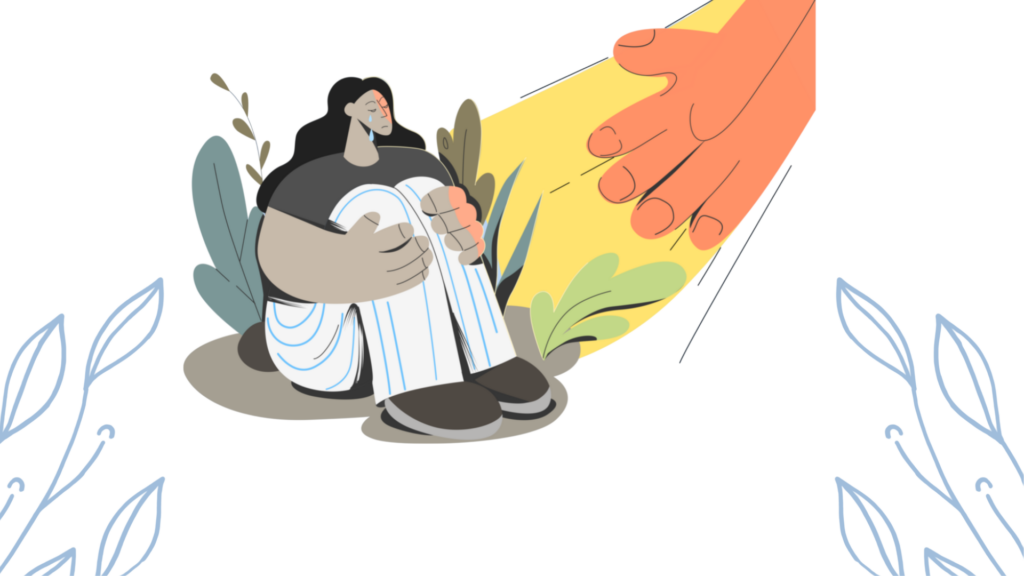
The New Year is supposed to feel hopeful. Fresh calendars, fresh intentions, fresh energy. But for many people, January brings something quieter and heavier—a resurgence of grief they thought they had already dealt with.
Not dramatic grief. Not always tears.
But a dull ache. A sudden emptiness. A sense that something feels off once the noise fades.
If grief feels louder after the celebrations end, it doesn’t mean you’re regressing. It means your system finally has space to feel.
Why Grief Often Waits Until After the Holidays
During the holidays, there is structure. Schedules. Social obligations. Food, noise, rituals, expectations. Even when the holidays are emotionally difficult, they provide distraction and containment.
Your mind stays occupied.
Your emotions stay managed.
Your grief stays postponed.
This is not avoidance—it’s survival.
Once January arrives, the external scaffolding disappears. And what remains is stillness. Grief often emerges in stillness, not chaos.
This is why many people report feeling more emotional after New Year’s than during it.
Delayed Grief Is Still Real Grief
There’s a common misconception that grief should be immediate, intense, and obvious. In reality, grief often operates on delay.
Delayed grief occurs when emotional processing is postponed because the nervous system is prioritizing functioning over feeling. This is especially common when:
-
You had to be “strong” for others
-
Life didn’t allow you to fall apart
-
The loss was complicated or ambiguous
-
You didn’t feel emotionally safe to grieve
January can become the moment when the emotional backlog arrives.
Not because you chose it—but because your system finally said, “Now we can.”
Why Celebrations Can Make Loss Feel Sharper
Holidays and New Year celebrations are relational by nature. They highlight connection, continuity, family, and shared futures.
When someone is missing—through death, estrangement, or a significant breakup—the contrast becomes unavoidable.
You may notice:
-
Heightened awareness of absence
-
Memories resurfacing unexpectedly
-
A sense of “this is how it should have been”
-
A quiet sadness beneath everyday routines
After the festivities end, the grief doesn’t leave with the decorations. It lingers because the emotional contrast has already been activated.
The Myth of the ‘Clean Slate’ and Grief
New Year culture pushes the idea of a reset. A clean slate. A forward-only mindset.
But grief doesn’t operate on calendars.
The pressure to “start fresh” can actually intensify pain, because it suggests that what you carry is outdated or inconvenient.
For people grieving, January can feel like a reminder that:
-
The world is moving forward
-
Time has passed without resolution
-
Their loss didn’t get a reset
This can create secondary grief—grief about still grieving.
Why Grief Feels Quieter—but Heavier—in January
Post-New Year grief is often subtle. You may still function. Go to work. Respond to messages. Smile when needed.
But internally, there may be:
-
Emotional numbness
-
Reduced motivation
-
Increased irritability
-
A sense of disconnection
-
Fatigue that doesn’t improve with rest
This is low-grade grief, and it’s often misunderstood as laziness, burnout, or depression. In reality, it’s the nervous system integrating loss without the buffer of distraction.
Grief Doesn’t Need Resolution—It Needs Permission
One of the most painful parts of post-holiday grief is the belief that you should be “over it by now.”
But grief is not a problem to solve. It’s an experience to be carried, integrated, and periodically revisited.
What helps is not forcing closure, but offering permission:
-
Permission to feel sad without explanation
-
Permission to miss someone without justifying it
-
Permission to move forward while still carrying loss
Grief softens when it’s allowed to exist without being rushed.
What Helps When Grief Resurfaces After New Year
Instead of trying to fix the feeling, focus on containment and compassion.
That might look like:
-
Naming the grief instead of suppressing it
-
Creating small rituals to honor what was lost
-
Letting January be emotionally slower than expected
-
Talking about the loss without minimizing it
-
Allowing mixed emotions—hope and sadness
Healing doesn’t mean forgetting. It means learning how to live with the memory without constant resistance.
You’re Not Behind—You’re Human
If grief feels louder after New Year, it doesn’t mean you failed to heal. It means the world got quiet enough for your heart to speak.
Grief doesn’t follow deadlines.
It doesn’t respect resolutions.
And it doesn’t disappear just because a year changed.
What matters is not how quickly you move on—but how gently you allow yourself to carry what remains.